peptides
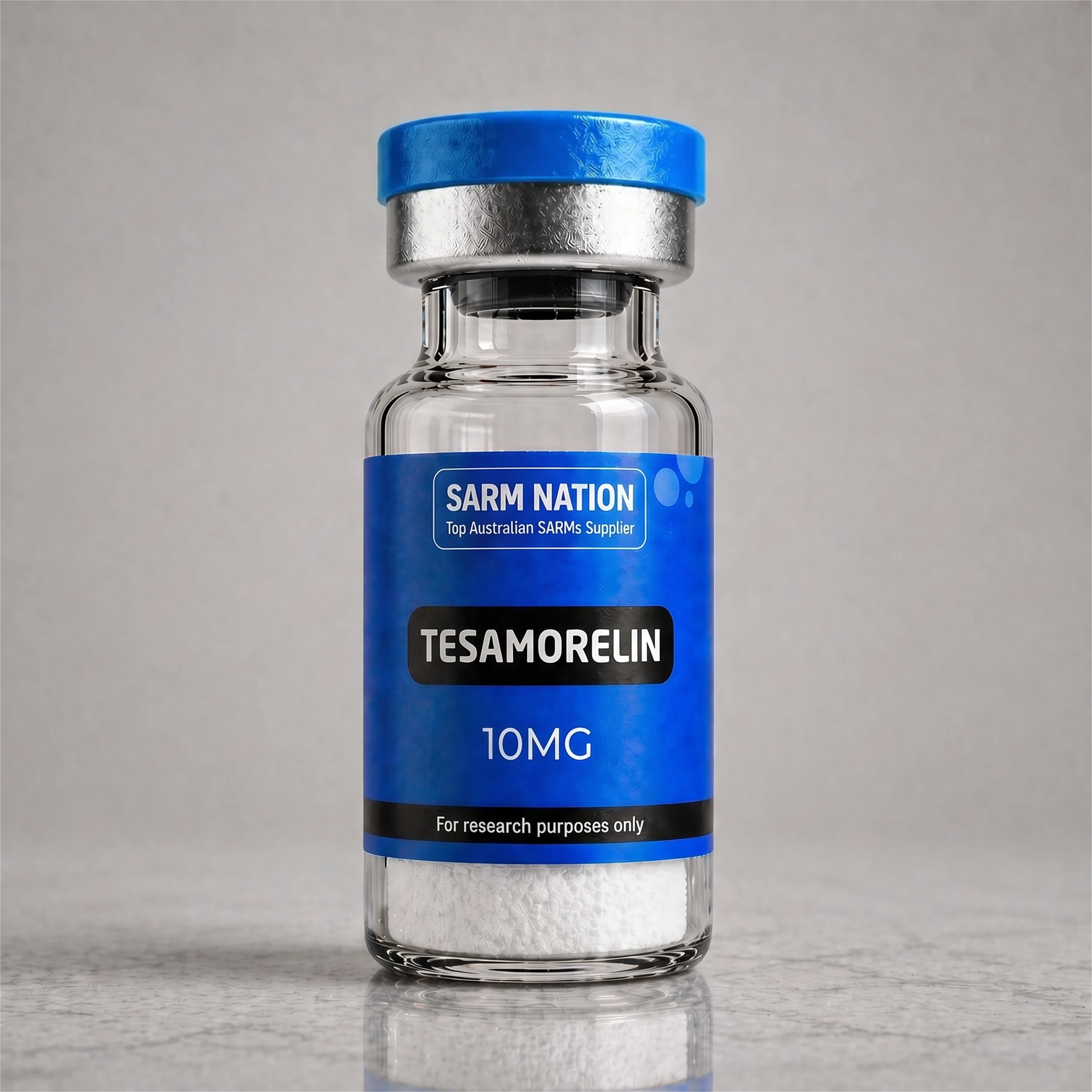
Tesamorelin 10MG
10 mg
Order now for next business day dispatch
To get a discount, simply add products to the cart and continue to the checkout page, and the discount will automatically be applied.
About this product
Tesamorelin is a synthetic 44-amino acid polypeptide analogue of endogenous growth hormone-releasing hormone (GHRH). It binds to GHRH receptors in the anterior pituitary gland, stimulating the synthesis and pulsatile release of endogenous growth hormone (GH). Unlike exogenous recombinant human GH administration, Tesamorelin preserves the body's natural GH secretion patterns, which is understood to offer distinct metabolic advantages in research settings. First studied in the context of HIV-associated lipodystrophy, Tesamorelin has since attracted broader research interest across metabolic, body composition, and neuroendocrine domains.
Product Summary Table
| Attribute | Details |
|---|---|
| Chemical Name | Tesamorelin acetate |
| Molar Mass | 5,109.9 Da |
| Chemical Formula | C₂₂₁H₃₆₆N₇₂O₆₇S |
| Classification | Synthetic GHRH analogue (peptide) |
| Synonyms | Egrifta (brand name), TH9507 |
| Country of Origin | Australia |
| Storage | Lyophilised: room temperature / Reconstituted: 1–4°C |
| Research Purity | ≥98% |
In Vivo Research Findings
Preclinical and clinical research has documented several measurable physiological effects of Tesamorelin administration:
- Visceral Adipose Tissue (VAT) Reduction Controlled trials have demonstrated statistically significant reductions in visceral adipose tissue. In a randomised placebo-controlled trial, VAT decreased by 10.9% (approximately −21 cm²) in the Tesamorelin group versus −0.6% in placebo over six months (P < 0.0001). Extended treatment over 12 months produced approximately 18% VAT reduction; effects reversed upon discontinuation.
- GH Pulsatility and IGF-1 Elevation A 4-week study in healthy males documented a significant increase in mean overnight GH (+0.5 ± 0.1 μg/L; P = 0.004), GH pulse area (+0.4 ± 0.1 log₁₀ μg/L; P = 0.001), and IGF-1 levels (+181 ± 22 μg/L; P < 0.0001). Notably, GH pulse frequency remained unchanged, indicating amplification rather than disruption of natural secretory patterns.
- Insulin Sensitivity Research indicates Tesamorelin does not significantly adversely affect insulin sensitivity. Studies reported no significant change in fasting glucose (P = 0.93) or insulin-stimulated glucose uptake (P = 0.61) during treatment periods.
- Body Composition Markers Secondary outcomes across trials have included improvements in trunk fat, waist circumference (P = 0.02), and waist-to-hip ratio (P = 0.001), while limb and subcutaneous abdominal fat remained largely unchanged — suggesting selectivity for visceral fat stores.
- Hepatic Safety No clinically apparent liver injury attributable to Tesamorelin has been reported in the literature. Serum ALT levels decreased in both treatment and placebo groups during studied periods. NCBI LiverTox rates Tesamorelin as an unlikely cause of liver injury (Likelihood Score: E).
Research Applications of Tesamorelin
- HIV-Associated Lipodystrophy The most studied application of Tesamorelin is the reduction of excess visceral adipose tissue in subjects with antiretroviral therapy-related lipodystrophy. This was the basis for FDA approval (2010) under the brand name Egrifta.
- Metabolic Dysfunction and Insulin Resistance Ongoing research is evaluating Tesamorelin as a potential investigational tool in models of insulin resistance and metabolic syndrome, given its selective effect on visceral fat and neutral impact on peripheral glucose metabolism.
- Non-Alcoholic Fatty Liver Disease (NAFLD) Emerging research explores Tesamorelin's role in hepatic fat reduction. Early data from controlled trials show a median hepatic fat change of −2% in Tesamorelin-treated subjects versus +1% in placebo controls.
- Neuroendocrine and Cognitive Research Tesamorelin's capacity to amplify pulsatile GH secretion has prompted interest in its potential neuroendocrine applications, particularly in age-related GH decline and associated cognitive changes, though this area remains in earlier stages of investigation.
- Body Composition Research Tesamorelin is studied in the context of lean mass retention and fat redistribution in subjects with GH-axis dysregulation.
Studies and Additional Info
The following published and indexed sources provide detailed research data on Tesamorelin:
- Tesamorelin – LiverTox, NCBI Bookshelf (NIH) Full compound profile including mechanism of action, clinical use, pharmacokinetics, and hepatotoxicity assessment.
- Effects of Tesamorelin in HIV-Infected Patients with Abdominal Fat Accumulation – PubMed (NIH) Randomised placebo-controlled trial documenting VAT reduction, body composition changes, and safety data over 6–12 months.
- Effects of a GHRH Analogue on Endogenous GH Pulsatility and Insulin Sensitivity in Healthy Men – PMC (NIH) 4-week trial quantifying GH secretion patterns, IGF-1 response, and insulin sensitivity outcomes under Tesamorelin administration.
FAQs
What is Tesamorelin? Tesamorelin is a synthetic analogue of growth hormone-releasing hormone (GHRH), comprising 44 amino acids. It stimulates endogenous GH secretion from the pituitary gland by binding to GHRH receptors, preserving the body's natural pulsatile GH release pattern.
How does Tesamorelin differ from recombinant human GH (rhGH)? Rather than introducing exogenous GH directly, Tesamorelin stimulates the pituitary to produce GH naturally. Research suggests this mechanism maintains physiological GH pulsatility, which may have distinct metabolic implications compared to continuous exogenous GH administration.
What has research shown regarding visceral fat? Clinical trials have documented statistically significant reductions in visceral adipose tissue (VAT) — approximately 10.9% over six months in controlled settings. Effects were selective for visceral fat stores, with subcutaneous fat remaining largely unchanged.
Does Tesamorelin affect blood glucose or insulin sensitivity? Published studies report no significant changes in fasting glucose or insulin-stimulated glucose uptake during Tesamorelin treatment, suggesting a neutral to favourable metabolic profile in the research populations studied.
What is the standard research form of Tesamorelin? Tesamorelin is supplied as a lyophilised (freeze-dried) powder intended for reconstitution with bacteriostatic water prior to use in research settings.
Is Tesamorelin approved for clinical use? Tesamorelin (brand name Egrifta) received FDA approval in 2010 for the reduction of excess abdominal fat in HIV-infected patients with antiretroviral therapy-associated lipodystrophy. All other applications remain under investigation.
What purity standard does this product meet? This product is manufactured to a research purity of ≥98%, verified by third-party testing.
This product is intended strictly for laboratory research purposes and is not approved for human consumption.